
Dialing Within Alabama - The Phone Codes You Use
Every local call in Alabama now takes ten digits: the area code plus the seven-digit number. That is the everyday phone code rule, and it holds statewide. Overlays made it mandatory in the 205/659, 256/938, and 334/483 regions, and the 988 rollout made it mandatory in 251. Toll and long-distance calls add a 1 in front. Operator-assisted calls use 0 plus the ten digits. Each call type has its own phone code format.
| Call Type | Phone Code Format | Example |
|---|---|---|
| Local within Alabama | 10-digit (area code + 7) | NPA-NXX-XXXX |
| Long distance within US | 1 + 10-digit | 1-NPA-NXX-XXXX |
| Operator services | 0 + 10-digit | 0-NPA-NXX-XXXX |
| Toll-free | 1 + toll-free prefix + 7 | 1-800-NXX-XXXX |
| International | 011 + country code + number | 011-CC-... |
| Community services | 3-digit N11 code | 211 |
Providers may also accept 1 plus ten digits for local calls at their discretion. What no longer works anywhere in the state is a seven-digit call.
N11 Service Phone Codes Used in Alabama
The shortest phone codes are the N11 codes: three digits that route straight to a service. Alabama uses most of them, though a few depend on where you live or which carrier you use. The state's PSC confirmed during the 251 dialing change that these stay three-digit calls even under mandatory ten-digit dialing.
| N11 Phone Code | What It Reaches in Alabama |
|---|---|
| 211 | 211 Connects Alabama community services; also reachable at 888-421-1266 or by texting a ZIP code to 898-211 |
| 311 | Non-emergency city services where a city offers it; Alabama has no statewide 311 |
| 411 | Carrier directory assistance; fees may apply |
| 511 | Traffic and travel information; Alabama road conditions are also published through ALGO Traffic |
| 611 | Your own carrier's repair and customer service line |
| 711 | Telecommunications Relay Service for hearing-impaired callers |
| 811 | Alabama 811, the call-before-you-dig locate service |
| 911 | Emergency police, fire, and medical response |
| 988 | Suicide and Crisis Lifeline, live nationwide since July 16, 2022 |
The 988 code carries a piece of Alabama dialing history. In the 251 region, 988 was already assigned as a regular exchange prefix, so numbers like 988-XXXX existed there. To free the three-digit code for the crisis line, 251 had to adopt mandatory ten-digit dialing in October 2021, ahead of any overlay.
Vertical Service (Star) Phone Codes for Alabama Lines
Star codes are phone codes that control features on your own line instead of placing a call. Support varies by carrier and line type, so a code that works on a Birmingham landline may do nothing on a prepaid mobile in Mobile. These are the phone codes commonly supported on Alabama lines.
| Star Phone Code | Action |
|---|---|
| *57 | Call trace after a threatening call; often needs law-enforcement follow-up and may carry a fee |
| *60 | Selective call block for specific numbers |
| *67 | Block your caller ID for the next call |
| *69 | Return the last incoming call |
| *70 | Disable call waiting for the next call |
| *72 | Activate call forwarding, then dial the forward-to number |
| *73 | Cancel call forwarding |
| *77 | Reject anonymous callers where supported |
| *82 | Unblock caller ID for the next call |
| *86 | Access voicemail on many carriers |
One caution applies to *72. Scammers sometimes talk victims into dialing it so their calls forward to another number, which can hijack bank verification calls. Never dial a star code at a stranger's request.
The Area Phone Codes Serving Alabama
Area codes are phone codes too, the three-digit NPA codes that identify each Alabama region. Seven are active, split across four zones. They matter on this level for one reason: they are the first three digits of every ten-digit local call. The geographic detail behind them, from coverage maps to overlay history, lives on the Alabama phone area codes page.
- 205 - the original 1947 code, central and west-central Alabama
- 659 - overlay of 205 since 2019
- 256 - northern Alabama since the 1998 split
- 938 - overlay of 256 since 2010
- 334 - southeast Alabama since the 1995 split
- 483 - overlay of 334, active in 2026
- 251 - Mobile and coastal Alabama since 2001
Toll-Free Phone Codes
Toll-free prefixes are phone codes that shift the cost of a call to the party receiving it. Alabama agencies use them heavily, which is why so many state hotlines start with 800 or 888. The DHR adult abuse hotline rides on the original 800 code, 211 Connects Alabama publishes an 888 number, and the Alabama court system's toll-free line uses 866. Seven prefixes exist, added one at a time as the previous supply ran out.
| Toll-Free Phone Code | Rolled Out |
|---|---|
| 800 | 1967 (original) |
| 888 | 1996 |
| 877 | 1998 |
| 866 | 2000 |
| 855 | 2010 |
| 844 | 2013 |
| 833 | 2017 |
Premium-rate codes are the opposite of toll-free. Calls to 1-900 numbers bill the caller at premium rates, so treat any callback request to a 900 number, or to an unfamiliar international code, as a red flag.
Country Code +1 and International Phone Codes
Alabama sits inside the North American Numbering Plan, the +1 country-code region shared by the US, Canada, and about two dozen other territories. Callers inside the region never dial +1 as a country code; the 1 they sometimes dial is the domestic toll prefix. Calling across an ocean is where international phone codes come in.
- From an Alabama landline calling abroad: dial 011, then the destination country code, then the local number.
- From a mobile phone in Alabama: press and hold 0 to get +, then dial the country code and the local number.
- From abroad calling Alabama: dial that country's exit code, then 1, then the ten-digit Alabama number.
Watch the 1 in both directions. Inside the numbering plan, a 1 before an Alabama number is a toll marker, not a country code. From outside, +1 is the country code that routes a call to Alabama and the rest of the NANP region.
Local Exchange Phone Codes (NXX) in Alabama
The middle three digits of a number are the exchange code, or NXX. Each Alabama NXX is assigned to a carrier within a rate center, the billing geography behind the prefix. Birmingham and Montgomery hold the largest blocks. Real examples show how mixed the assignments are: pieces of Birmingham's 205-354 prefix sit with a legacy landline carrier, a wireless carrier, and a VoIP provider, while blocks of Montgomery's 334-647 split between wireless and competitive carriers.
These phone codes once mapped cleanly to a physical central office. Portability ended that. A number keeps its NXX when its owner changes carriers, so a prefix lookup shows origin, not the current provider. Official assignment data comes from NANPA, and deeper routing detail sits in the licensed LERG Routing Guide used by the industry.
STIR/SHAKEN and the "Likely Spam" Label
Some phone codes never get dialed at all; they arrive as labels on your screen. STIR/SHAKEN is the FCC-mandated caller-ID authentication framework. It lets the receiving carrier judge whether a caller is authorized to use the number being displayed, which is what produces labels like "Likely Spam," "Spam Risk," or "Verified" on Alabama phones. The label reflects authentication and complaint data, not intent, so a legitimate small business can occasionally get flagged while a verified caller can still be running a scam.
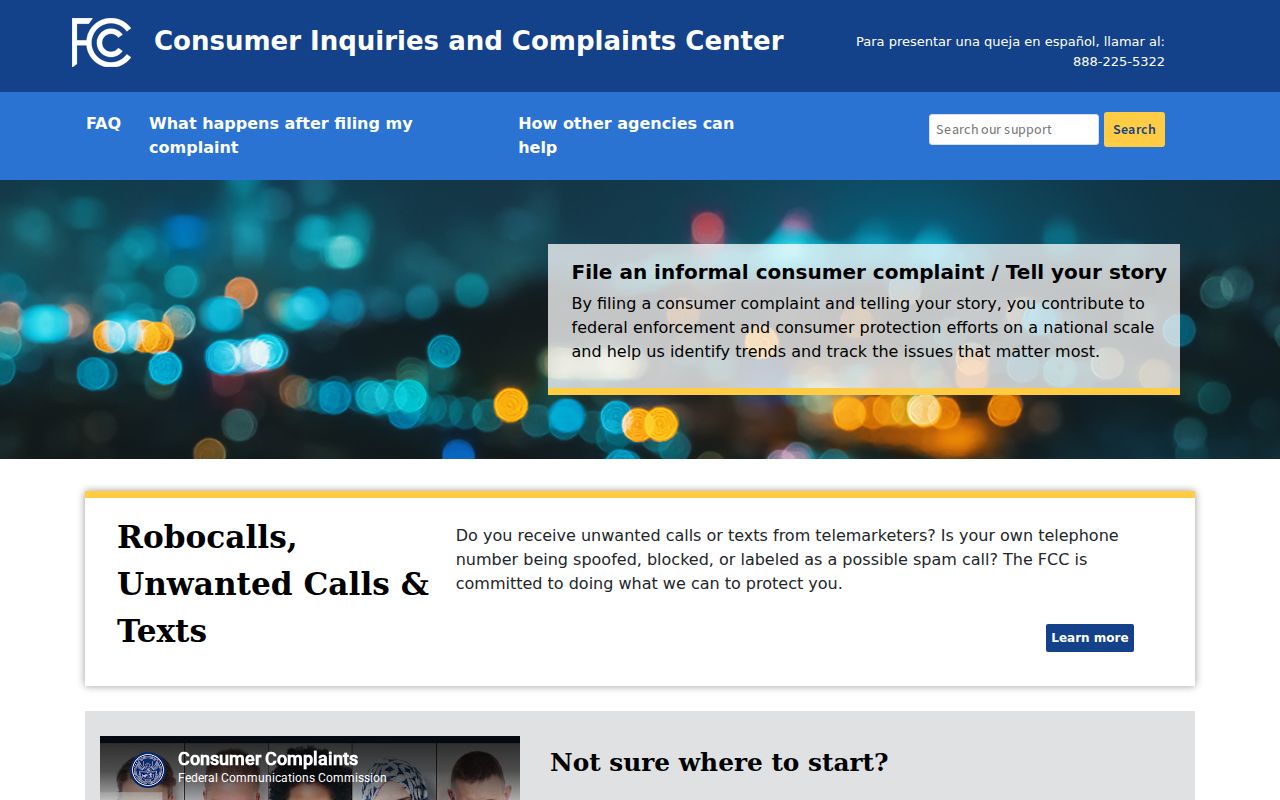
When a labeled call claims to be a government office, bank, or utility, the safe move is independent verification: hang up and call the official number yourself. Numbers that keep abusing spoofed caller ID can be reported to the FCC Consumer Complaint Center.
Telemarketing calls are a separate track. Registering at the National Do Not Call Registry is free, and violations can be reported 31 days after registration.
The registry stops sales calls from law-abiding companies. It does not stop political calls, charity appeals, surveys, or outright criminals, which is why the spam labels and the registry work best together.
Phone Code Definitions
A handful of technical terms cover the whole Alabama numbering system.
- NPA
- Numbering Plan Area - the 3-digit area code at the start of every North American number.
- NXX
- Central office code - the 3 digits after the area code.
- N11
- 3-digit service codes (211, 311, 411, 511, 611, 711, 811, 911, 988).
- Vertical Service Code
- A * + 2-digit code that triggers a call-handling feature.
- Toll-Free Prefix
- An NPA that routes a call's billing to the called party (800, 888, 877, 866, 855, 844, 833).
- NANP
- North American Numbering Plan - the +1 country-code region covering the US, Canada, and 23 other territories.
How to Look Up an Alabama Phone Code
Verifying a phone code is quick with the right source. NANPA publishes the official record: planning letters document every Alabama area-code change, and its assignment reports show which carrier holds each prefix. The FCC's consumer guides explain dialing rules in plain terms, including the ten-digit change that came with 988. For the consumer-facing view of a number's reputation, third-party caller-ID services fill the gap.
One example is Truecaller's reverse lookup, which shows how a number and its phone code appear to the app's spam-reporting community.
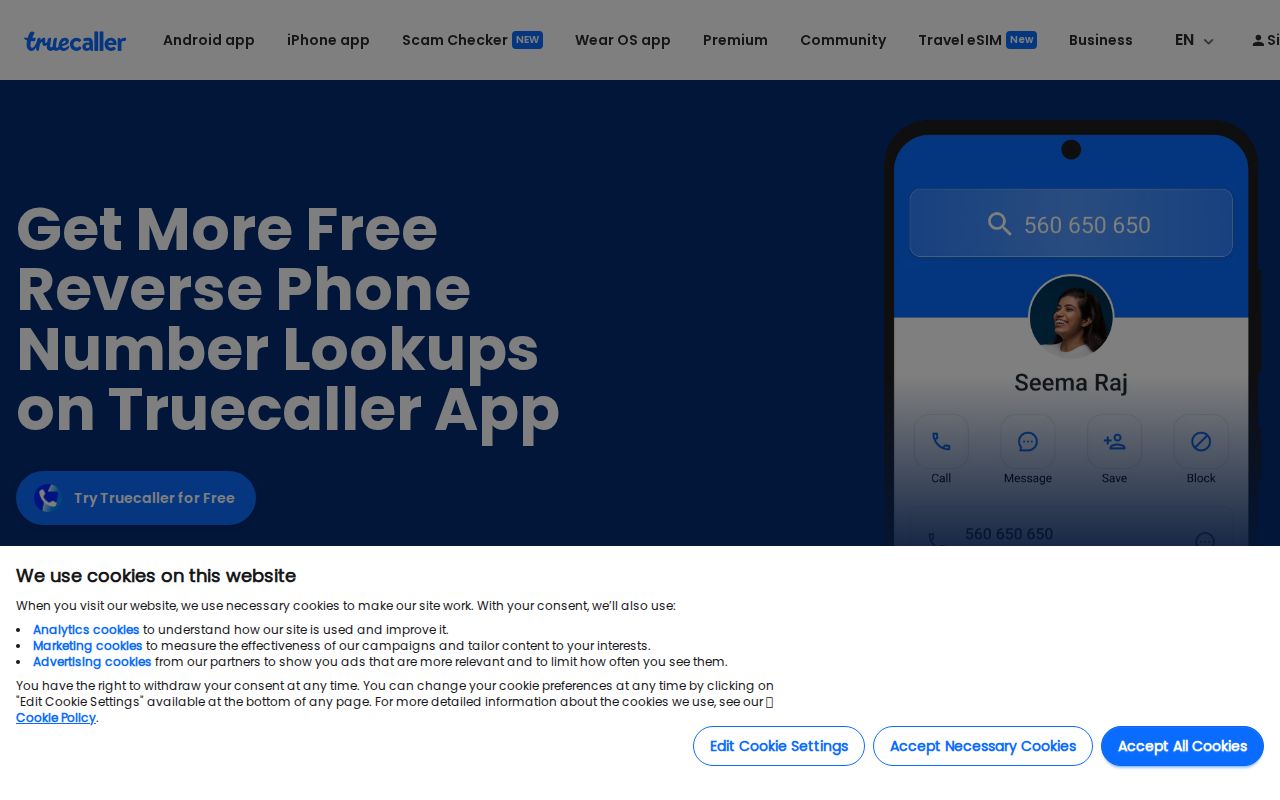
Community data like that is a supplement, not a source of record. For identifying who is actually behind a full number, the complete official and third-party toolkit sits on the Alabama phone numbers page.